
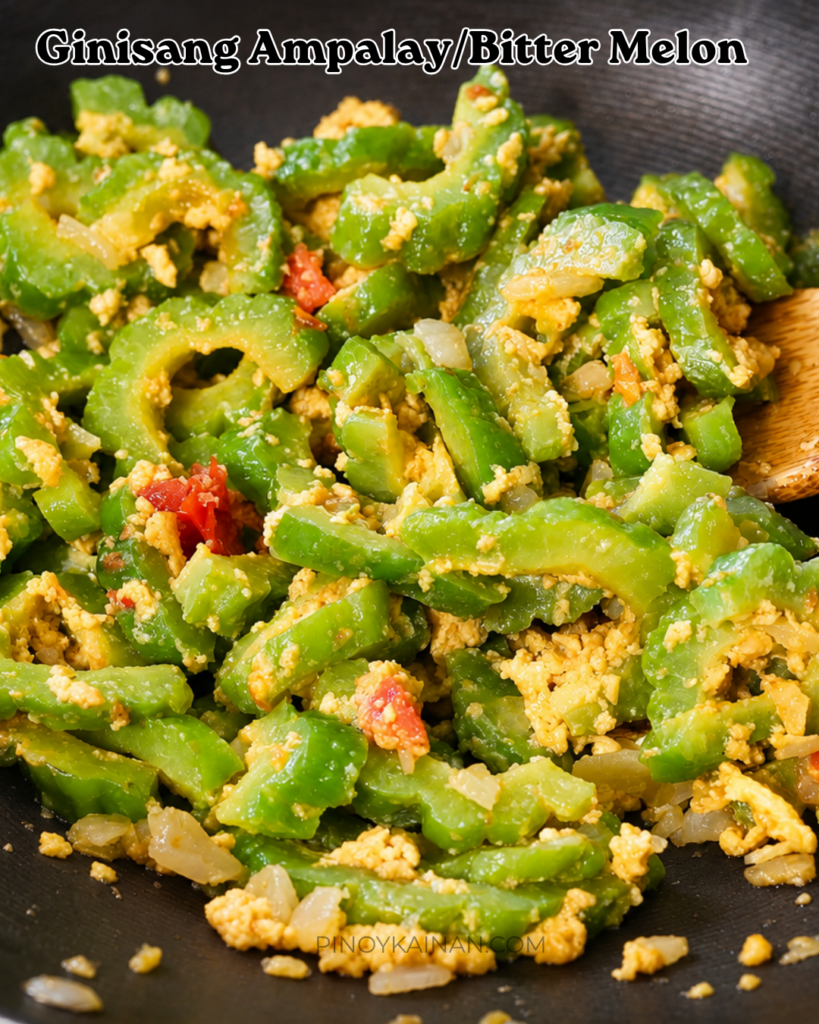
This Ginisang Ampalaya with Bagoong Recipe is a delicious Filipino vegetable dish that combines the pleasantly bitter flavor of ampalaya (bitter melon) with the rich, savory taste of bagoong alamang (fermented shrimp paste). Sautéed with fresh garlic, onions, and juicy tomatoes, this easy Pinoy ulam delivers a wonderful balance of salty, slightly sweet, and umami flavors in every bite.
Unlike ordinary Ginisang Ampalaya, this version uses bagoong alamang to give the dish a deeper, more satisfying flavor. The shrimp paste complements the natural bitterness of the ampalaya, while softened tomatoes add moisture and subtle sweetness. Optional scrambled eggs make the dish heartier, and a little siling labuyo provides a spicy kick for those who enjoy extra heat.
The secret to making delicious Ginisang Ampalaya without overwhelming bitterness is to remove the seeds and white pith, lightly salt the sliced bitter melon, and avoid overcooking it. This helps mellow the bitterness while preserving its beautiful green color and tender-crisp texture.
Perfect for everyday lunch, dinner, or a quick lutong-bahay meal, this Ginisang Ampalaya with Bagoong is an affordable way to enjoy a traditional Filipino vegetable dish using simple pantry ingredients.Serve it hot with freshly steamed jasmine rice and a squeeze of calamansi for a comforting, savory meal that proves even bitter vegetables can be incredibly delicious.
✅ Quick Tips: Read the recipe in its entirety before you start cooking. This will help you understand the ingredients, steps, and timing involved, and allow you to prepare any necessary equipment or ingredients beforehand.
This Ginisang Ampalaya with Bagoong Recipe is a delicious Filipino vegetable dish that combines the pleasantly bitter flavor of ampalaya (bitter melon) with the rich, savory taste of bagoong alamang (fermented shrimp paste). Sautéed with fresh garlic, onions, and juicy tomatoes, this easy Pinoy ulam delivers a wonderful balance of salty, slightly sweet, and umami flavors in every bite.
Malinamnam, garlicky, slightly spicy at hindi sobrang mapait! Perfect na ulam with mainit na kanin.
Wash the ampalaya thoroughly under running water and trim both ends.
Slice each ampalaya lengthwise into two halves. Using a spoon, scrape out the seeds and soft white pith from the center.
Cut the ampalaya into thin, even half-moon slices, approximately ⅛–¼ inch (3–6 mm) thick.
Place the slices in a bowl and sprinkle with 1 teaspoon salt. Toss gently until evenly coated.
Allow the ampalaya to rest for approximately 10 minutes. Rinse briefly with cool water and drain thoroughly in a colander.
Cooking Tip: Salting can help mellow the bitterness, although ampalaya will naturally retain some of its characteristic bitter flavor. Avoid excessive squeezing, which can damage the slices and soften their texture.
If using eggs, heat approximately 1 teaspoon of the measured cooking oil in a large nonstick skillet over medium-low heat.
Pour in the lightly beaten eggs and allow them to begin setting.
Using a spatula, gently push the cooked portions toward the center to form soft, fluffy curds.
Cook until just set, then transfer the eggs to a clean plate.
Set aside while preparing the vegetables.
Cooking Tip: Cooking the eggs separately helps prevent them from becoming dry or rubbery when combined with the ampalaya later.
For a version without eggs, simply skip this step.
In the same skillet, heat the remaining cooking oil over medium heat.
Add the sliced red onion and sauté for approximately 1 minute, until slightly softened.
Stir in the minced garlic and cook for another 30 seconds until fragrant.
Add the chopped ripe tomatoes and continue cooking for 2–3 minutes, stirring occasionally.
Gently press the tomatoes with the back of a spoon to release their juices and create a light, savory sauce.
Cooking Tip: Allowing the tomatoes to soften helps balance the ampalaya's natural bitterness with a little sweetness and acidity.
Add 1 tablespoon of bagoong alamang to the sautéed garlic, onions, and tomatoes.
Stir-fry over medium heat for approximately 2–3 minutes, until the shrimp paste is well incorporated and fragrant.
If using raw, uncooked bagoong alamang, follow the product's cooking guidance and cook it thoroughly before adding the ampalaya. The sautéing time may need to be extended.
Start with just 1 tablespoon because the saltiness of bagoong varies considerably among brands.
Add more later if you prefer a stronger shrimp paste flavor.
Cooking Tip: Cooking the bagoong with the softened tomatoes helps distribute its intense savory flavor evenly throughout the dish.
Add the rinsed and well-drained ampalaya slices to the skillet.
If using siling labuyo, add it at this stage.
Gently toss the vegetables until evenly coated with the savory tomato and bagoong mixture.
Stir-fry over medium heat for approximately 3–5 minutes, or until the ampalaya becomes bright green and tender-crisp.
Add 2–3 tablespoons water only if the skillet becomes too dry or the seasonings begin sticking to the bottom.
Cooking Tip: Avoid overcooking the ampalaya. It tastes best when slightly tender while retaining a little crunch and its vibrant green color.
Sprinkle in ¼ teaspoon ground black pepper.
Taste the vegetables before adding any additional salt because bagoong alamang is already quite salty.
If desired, add the remaining ½ tablespoon of bagoong for a stronger savory flavor.
For a slightly sweeter balance, sprinkle in up to ½ teaspoon sugar and mix gently.
Return the cooked scrambled eggs to the skillet and fold them into the vegetables.
Cook for another 30 seconds, just until the eggs are warmed through and evenly distributed.
Turn off the heat and transfer the cooked Ginisang Ampalaya with Bagoong to a serving platter.
Garnish with a few slices of fresh siling labuyo if you enjoy spicy food.
Serve immediately with hot steamed white rice and fresh calamansi wedges.
Squeeze a little calamansi juice over the vegetables just before eating to brighten the savory flavors.
Serving Tip: This dish pairs especially well with plain rice because the rice balances the salty, umami-rich bagoong and the distinctive bitterness of the ampalaya.
1. Choose fresh, firm ampalaya. Look for bitter melon with bright green skin, a firm texture, and no soft or discolored spots. Fresh ampalaya generally holds up better during stir-frying.
2. Remove the seeds and white pith. Scraping away the center helps improve the texture and can reduce some of the bitterness, although the green flesh itself remains naturally bitter.
3. Slice evenly for consistent cooking. Thin, uniform half-moon slices cook quickly and evenly. Slices that are too thick may remain overly firm, while excessively thin slices can become soft.
4. Salt briefly, not excessively. Letting ampalaya rest with salt for around 10 minutes is a popular Filipino preparation technique. Rinse and drain afterward to prevent the dish from becoming overly salty.
5. Use flavorful, ripe tomatoes. Ripe tomatoes provide natural sweetness, acidity, and moisture that complement the salty bagoong.
6. Start with a smaller amount of bagoong. Different brands vary in saltiness, sweetness, and fermentation intensity. Begin with 1 tablespoon and add more only after tasting.
7. Cook the bagoong with the aromatics. Sautéing shrimp paste with garlic, onions, and tomatoes allows its savory flavor to blend into the dish rather than remain concentrated in separate spots.
8. Avoid adding too much water. Ampalaya releases moisture as it cooks. Excess water can dilute the bagoong flavor and produce soggy vegetables.
9. Keep the ampalaya tender-crisp. Stir-fry briefly over medium heat. Stop cooking while the slices still have a pleasant bite.
10. Cook eggs separately for a fluffy texture. Soft-scrambling the eggs before adding them to the vegetables prevents them from breaking into tiny dry pieces.
11. Make it spicy with siling labuyo. Add a small amount of fresh chili for extra heat. Keep it mild when serving children or anyone who prefers less spice.
12. Finish with fresh calamansi. A squeeze of calamansi adds a bright citrus flavor that balances the rich shrimp paste and fresh vegetables.
| Original Ingredient | Recommended Substitute |
|---|---|
| Fresh ampalaya | Frozen sliced bitter melon, thawed and drained |
| Red onion | Yellow onion or white onion |
| Fresh garlic | Garlic paste or ½ teaspoon garlic powder |
| Ripe tomatoes | Canned diced tomatoes, drained |
| Bagoong alamang | Ginisang bagoong or sautéed bottled shrimp paste |
| Eggs | Omit entirely for an egg-free version |
| Siling labuyo | Red chili flakes or sliced serrano pepper |
| Calamansi | Fresh lime or lemon |
| White sugar | Brown sugar, used sparingly |
| Neutral cooking oil | Canola oil, vegetable oil, or avocado oil |
For a heartier version, include the two lightly beaten eggs.
Cook the eggs separately until softly scrambled, then fold them into the finished ampalaya.
This version has a satisfying combination of tender eggs, crisp vegetables, and savory shrimp paste.
It is especially good with steamed rice for a simple Filipino lunch.
For a simpler vegetable-focused version, omit the eggs.
Follow the remaining instructions as written, allowing the ampalaya, tomatoes, and shrimp paste to provide the main flavor.
This version is naturally egg-free when prepared with egg-free condiments, but it is still not vegetarian or vegan because bagoong alamang contains shrimp.
For extra spice, increase the siling labuyo to 2 small chilies, finely sliced.
Add the chilies while sautéing the bagoong or when adding the ampalaya.
Use less chili for a mild version, and adjust according to your family's preference.
Expert Tip: Sliced chilies release more heat into the dish than whole chilies. Add them gradually.
For a more substantial ulam, add 150–200 g thinly sliced pork belly or pork shoulder.
Cook the pork first until fully cooked and lightly browned, then remove it from the skillet.
Continue with the garlic, onion, tomatoes, and bagoong. Return the pork before adding the ampalaya.
Allow approximately 8–12 additional minutes of cooking time, depending on the pork cut and thickness.
Dietary Note: Add the contains-pork classification when making this variation.
For a variation with added plant protein, include 150–200 g firm tofu, cut into bite-sized cubes.
Pan-fry the tofu until lightly golden, then set aside.
Prepare the ampalaya as directed and fold in the cooked tofu during the final minute.
This creates a more filling vegetable dish while preserving the familiar bagoong flavor.
Dietary Note: The dish remains non-vegetarian because it still contains shrimp paste.
Ginisang Ampalaya with Bagoong is best enjoyed freshly cooked, when the bitter melon is bright green and slightly crisp. However, leftovers can be refrigerated for convenient meals.
Allow the dish to cool briefly after cooking, then transfer it to a shallow, airtight food-safe container.
Refrigerate within 2 hours of cooking, or within 1 hour if the surrounding temperature exceeds 90°F (32°C).
Store at 40°F (4°C) or colder for up to 3–4 days.
For the best flavor and texture, enjoy the leftovers within 1–2 days. The ampalaya may become softer and release additional moisture during refrigeration.
Expert Tip: Store the cooked ampalaya separately from steamed rice. This prevents the rice from absorbing excess moisture and makes reheating easier.
Freezing Ginisang Ampalaya with Bagoong is not recommended for the best texture.
Ampalaya contains considerable moisture and may become soft and watery after freezing and thawing. The eggs, if included, may also develop a slightly rubbery texture.
If freezing is necessary:
Thaw overnight in the refrigerator before reheating.
Expert Tip: For better freezing results, prepare the recipe without eggs and slightly undercook the ampalaya. Add freshly cooked eggs after reheating, if desired.
Stovetop reheating is the preferred method because it helps preserve the vegetables' texture.
Avoid prolonged cooking because the ampalaya can become overly soft.
Transfer one portion of the cooked ampalaya to a microwave-safe container.
Cover loosely with a microwave-safe lid.
Microwave in 30-second intervals, stirring between intervals, until evenly reheated to 165°F (74°C).
Allow the food to stand briefly before eating.
Expert Tip: Avoid overheating because the eggs may become rubbery and the vegetables may lose their remaining crispness.
For quicker weekday cooking, prepare the ingredients ahead of time.
Wash and slice the ampalaya, then refrigerate it in a covered container. Salt and rinse the slices shortly before cooking.
You can also chop the garlic, onion, and tomatoes in advance and refrigerate them separately.
For the best texture, sauté the ingredients shortly before serving.
If making a larger batch, consider preparing the ampalaya without eggs and cooking fresh scrambled eggs when reheating individual portions.
Best Serving Recommendation: Serve Ginisang Ampalaya with Bagoong immediately after cooking, with hot steamed rice and a squeeze of fresh calamansi.


