

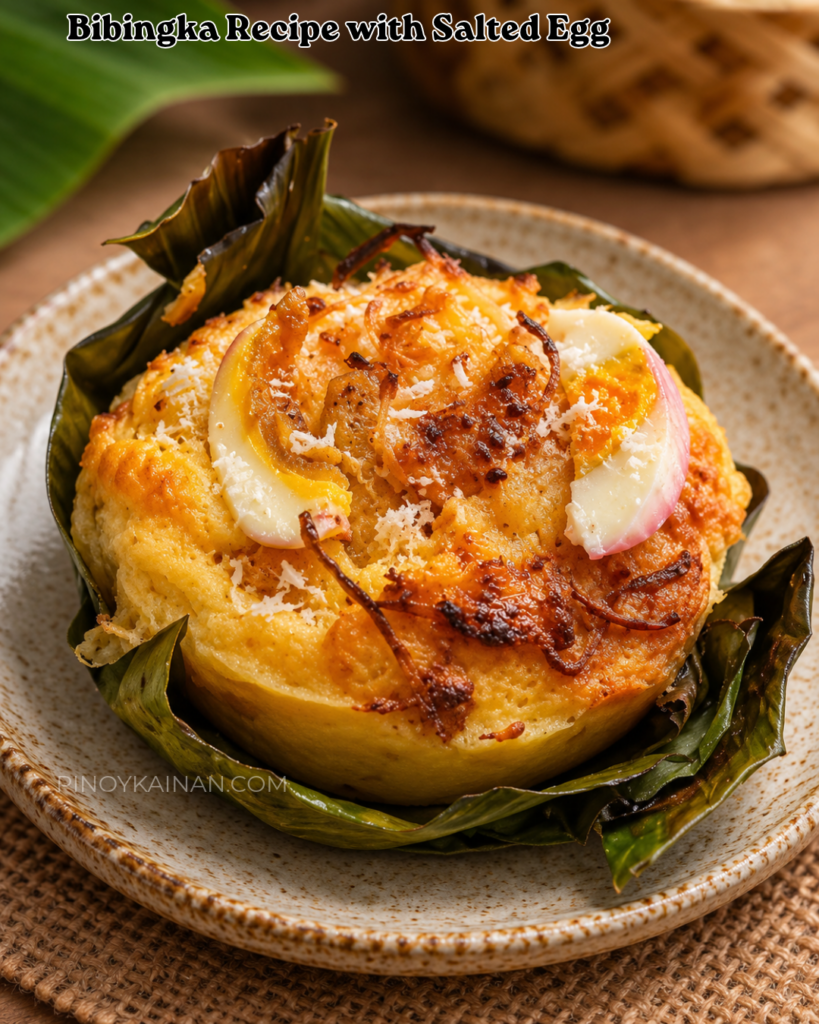

This Bibingka Recipe brings the comforting flavors of traditional Filipino Christmas celebrations into your kitchen. Made with rice flour, creamy coconut milk, eggs, and butter, this homemade Filipino rice cake has a soft, tender center, lightly golden edges, and a delicate coconut aroma.
Topped with sliced salted duck eggs (itlog na maalat), melted cheese, and freshly grated coconut, bibingka offers a delicious balance of sweet and savory flavors. The banana leaf lining gives the cake its distinctive fragrance, reminiscent of bibingka traditionally baked in clay pots over charcoal.
Bibingka is especially popular during the Christmas season, when families enjoy it after Simbang Gabi, often alongside hot coffee or sikwate. This easy oven-baked version uses regular rice flour instead of freshly ground rice batter (galapong), making it convenient for Filipino home cooks in the Philippines and United States.
Bibingka Recipe (Filipino Coconut Rice Cake with Salted Egg)
Description
Bibingka is a festive Filipino rice cake traditionally associated with Christmas mornings and Simbang Gabi. This home-oven version uses rice flour, coconut milk, banana leaves, salted duck eggs, and grated cheese for a soft, lightly sweet crumb and fragrant finish. Baked until gently golden and brushed with butter, it captures the familiar sweet-salty flavors of holiday bibingka without a traditional clay oven or charcoal. Bibingka is a warm Filipino rice cake traditionally associated with Christmas celebrations and often scented by banana leaves. This oven-friendly version uses regular rice flour and coconut milk for a tender crumb, then adds salted duck egg, cheese, and butter for a savory-sweet finish. Serve warm with coffee or sikwate.
Ingredients
Instructions
-
-
Preheat and Prepare Banana Leaf — Preheat the oven to 375°F (190°C). Wash and dry the banana leaf, then warm it briefly over a low flame or dry skillet until pliable. Line a lightly greased 9-inch round cake pan with the softened leaf, allowing some overhang. Cooking Tip: Banana leaves add a subtle traditional aroma but parchment works if necessary.
-
Combine Dry Ingredients — In a large bowl, whisk together fine regular white rice flour, baking powder, fine salt, and granulated sugar until evenly blended. Break up any lumps in the rice flour with the whisk. Cooking Tip: Use regular rice flour, not glutinous rice flour, for the intended fluffy texture.
-
Whisk the Wet Ingredients — In a second bowl, lightly beat the two eggs. Add the coconut milk, whole milk, and 3 tablespoons of the measured melted butter, whisking until smooth. Save the remaining melted butter for finishing. Cooking Tip: Do not use very hot butter or it can partially cook the eggs.
-
Make a Smooth Bibingka Batter — Pour the wet ingredients into the dry rice-flour mixture. Stir gently until no dry patches remain and the batter is smooth enough to pour. Stop mixing once combined rather than beating vigorously. Cooking Tip: Overmixing can produce a denser cake.
-
Fill the Prepared Cake Pan — Pour the batter into the banana leaf-lined 9-inch pan and spread it evenly. Check that the leaf lies flat enough for even cooking and that the pan is not filled too close to the top. Cooking Tip: A flat surface helps topping pieces stay distributed.
-
Arrange the Salted Duck Eggs — Place the slices of cooked salted duck egg across the batter so that each eventual wedge will receive some topping. Press gently if needed without submerging the slices completely. Cooking Tip: Make sure purchased salted eggs are fully cooked before using.
-
Bake Until Nearly Set — Transfer the pan to the center of the preheated oven and bake for approximately 20 minutes. The edges should begin setting and the center should no longer look completely liquid. Keep an eye on the banana leaf edges so they do not contact heating elements. Cooking Tip: Do not open the oven repeatedly during the first stage.
-
Add Cheese and Finish Baking — Sprinkle grated mild cheddar or Filipino quick-melt cheese over the top. Continue baking another 5–10 minutes until the surface is lightly golden and a tester inserted into cake—not the salted egg—comes out clean. Cooking Tip: Adding cheese later allows it to melt without burning.
-
Rest and Add Finishing Butter — Set the pan on a cooling rack for 10 minutes so the bibingka firms slightly. Brush the surface with the reserved melted butter and add optional grated coconut and a light sprinkle of finishing sugar. Cooking Tip: Warm bibingka absorbs butter and smells especially fragrant.
-
Slice and Serve Warm — Carefully lift or slice the bibingka into eight wedges, making sure no stiff banana leaf pieces are included in the portions. Serve warm with hot coffee or sikwate and refrigerate leftovers promptly. Cooking Tip: This rice cake is softest and most aromatic shortly after baking..
