


This Pork Siomai Recipe brings the delicious flavors of Filipino-style dim sum straight to your kitchen. Made with well-seasoned ground pork, shiitake mushrooms, fresh garlic, ginger, and traditional Asian seasonings, these homemade pork siomai are wonderfully juicy, tender, and packed with savory flavor.
Inspired by the popular pork siomai served at Filipino food stalls, dim sum restaurants, and neighborhood siomai shops, this recipe uses a simple mixing technique to create the signature springy, slightly bouncy texture. The secret is choosing ground pork with enough fat, keeping the filling cold, and mixing it in one direction while gradually adding ice-cold water.
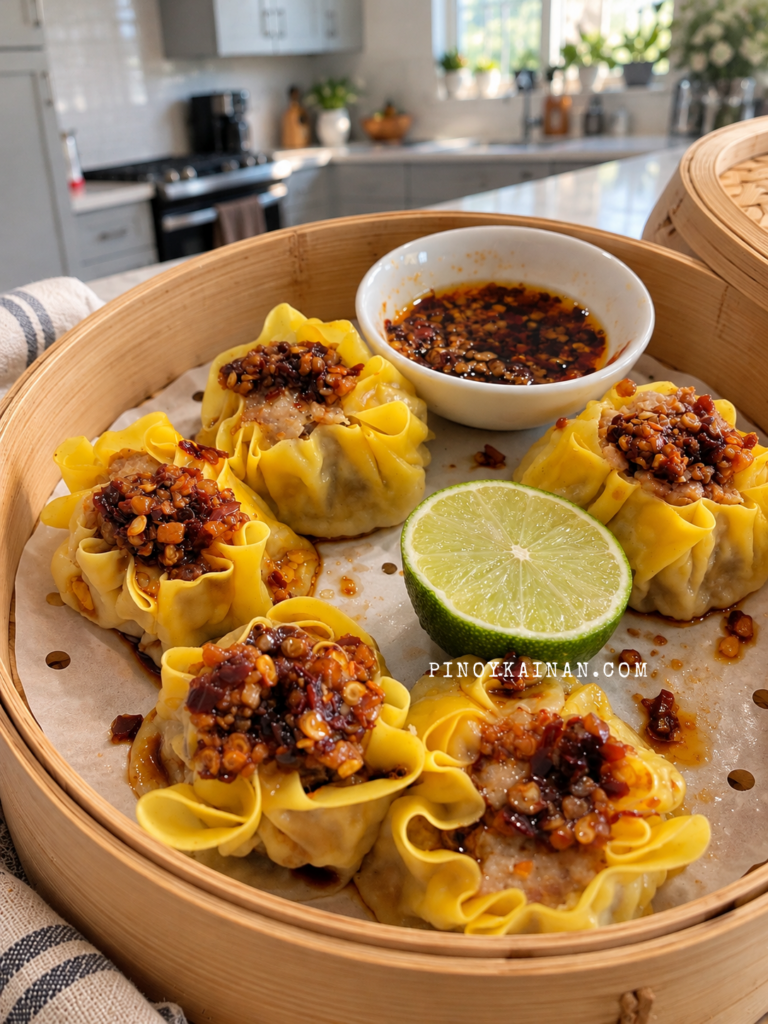
Each siomai is wrapped in a thin wonton wrapper and steamed until perfectly cooked. Serve the dumplings with a fragrant homemade chili garlic oil featuring lightly crispy garlic, chili flakes, and toasted sesame seeds. A classic toyomansi dipping sauce, made with soy sauce and fresh calamansi juice, adds the perfect balance of salty, tangy, and spicy flavors.

Whether you’re preparing an afternoon merienda, family dinner, party appetizer, or homemade version of your favorite street-food snack, this easy-to-follow Pork Siomai recipe is sure to become a family favorite.
Enjoy your homemade siomai on its own, with steamed rice for a satisfying siomai rice meal, or as part of a larger Filipino-inspired dim sum spread.
✅ Quick Tips: Read the recipe in its entirety before you start cooking. This will help you understand the ingredients, steps, and timing involved, and allow you to prepare any necessary equipment or ingredients beforehand.
Pork Siomai Recipe (Juicy Filipino-Style Siomai with Chili Garlic Oil)x
Description
HOMEMADE PORK SIOMAI – JUICY, TENDER & FULL OF FLAVOR!
Restaurant-style pork siomai made fresh at home!
Juicy ground pork, savory mushrooms, garlic, ginger, and perfectly steamed wrappers—finished with homemade crispy chili garlic oil!
Ingredients
For the Pork Siomai Filling
For Wrapping and Steaming
For the Crispy Garlic Chili Oil
For the Toyomansi Dipping Sauce
Instructions
-
Soak and Prepare the Mushrooms
Place the dried shiitake mushrooms in a small bowl and cover with warm water.
Allow them to soak for approximately 20 minutes, or until softened and fully rehydrated.
Drain the mushrooms, gently squeeze out excess water, remove the tough stems, and finely mince the caps.
Meanwhile, finely chop the carrots and green onions, mince the garlic, and grate the ginger.
Cooking Tip: Finely chopping the vegetables ensures they blend evenly into the pork filling without creating large pieces that interfere with the dumplings' texture.
-
Combine the Pork and Seasonings
Place the ground pork in a large mixing bowl.
Add the minced shiitake mushrooms, carrots, green onions, garlic, and ginger.
Pour in the oyster sauce, light soy sauce, and toasted sesame oil.
Add the sugar and ground white pepper.
Using a wooden spoon or sturdy spatula, mix until the ingredients are evenly distributed.
Cooking Tip: Choose ground pork with approximately 20–25% fat. A little fat helps keep the steamed siomai juicy rather than dry and crumbly.
-
Mix the Filling Until Sticky and Elastic
Sprinkle the cornstarch over the seasoned pork mixture.
Begin stirring firmly in one direction, either clockwise or counterclockwise.
Gradually add the ice-cold water, one tablespoon at a time, while continuing to mix.
Mix vigorously for approximately 3–5 minutes until the filling becomes sticky, cohesive, and slightly elastic.
The mixture should cling together rather than fall apart when lifted with a spoon.
This mixing process helps develop the characteristic springy, juicy texture of restaurant-style siomai.
Cooking Tip: Keep the mixture cold throughout preparation. If the filling begins to feel warm or greasy, refrigerate it briefly before continuing.
-
Test the Filling for Seasoning
Before wrapping all the dumplings, cook approximately 1 teaspoon of filling in a small skillet until it reaches 160°F (71°C).
Taste the cooked sample and adjust the remaining raw filling with a little more soy sauce, white pepper, or sugar if needed.
Remember that the dipping sauce and chili garlic oil will also contribute saltiness and flavor.
Cooking Tip: Testing a small portion before wrapping helps ensure that the entire batch is properly seasoned.
-
Wrap the Pork Siomai
Place one siomai wrapper on the palm of your hand.
Spoon approximately 1 heaping tablespoon (20–25 g) of pork filling into the center.
Gently gather the wrapper's edges around the filling, creating a small cylindrical dumpling with an open top.
Press the sides lightly to help the wrapper adhere to the filling.
Flatten the bottom against a clean plate or work surface so the siomai can stand upright in the steamer.
If desired, sprinkle a tiny amount of minced carrot over the exposed filling for a traditional siomai-shop appearance.
Repeat until all the filling is used.
Cooking Tip: Avoid overfilling the wrappers. Leave the top exposed and keep the dumplings fairly uniform in size so they cook evenly.
-
Prepare the Steamer
Fill the bottom of a steamer with enough water to produce steady steam without allowing the water to touch the dumplings.
Bring the water to a gentle boil.
Line the steaming basket with perforated parchment paper or clean napa cabbage leaves. Lightly grease the lining if needed.
Arrange the siomai upright in a single layer, leaving a little space between each dumpling to allow steam to circulate.
Cover the steamer securely.
Cooking Tip: If using a bamboo steamer, avoid packing the dumplings tightly together. Proper steam circulation helps cook the filling evenly.
-
Steam the Pork Siomai
Steam the prepared dumplings over steadily simmering water for approximately 12–15 minutes.
Cooking time may vary depending on the size of the dumplings and how tightly the filling is packed.
The pork filling should become firm and fully cooked while remaining moist and juicy.
Use an instant-read food thermometer to check the center of a representative dumpling. Ground pork must reach an internal temperature of 160°F (71°C).
FoodSafety.gov+1If necessary, steam for another 2–3 minutes and check again.
Carefully remove the steamer from the heat once the dumplings are fully cooked.
Cooking Tip: Avoid unnecessarily prolonged steaming. Once the filling has reached a safe internal temperature, remove the dumplings to preserve their tender texture.
-
Prepare the Crispy Garlic Chili Oil
While the siomai is steaming, prepare the homemade chili garlic oil.
Place ¼ cup neutral cooking oil and the finely minced garlic in a small, dry saucepan.
Heat over low heat, stirring frequently, for approximately 6–8 minutes until the garlic turns lightly golden and begins to crisp.
Watch carefully because garlic can turn from golden to burnt very quickly.
Remove the saucepan from the heat before the garlic becomes dark brown.
Stir in the chili flakes and toasted sesame seeds. The residual heat will gently release their aroma without scorching them.
Allow the oil to cool until no longer hot before stirring in the soy sauce, sugar, and salt. Add the soy sauce cautiously because its water content can cause splattering if the oil is still hot.
Mix until combined.
Cooking Tip: For the best flavor, keep the garlic golden rather than dark brown. Burnt garlic gives the chili oil an unpleasant bitter taste.
Important: Homemade garlic oil is not shelf-stable. Refrigerate leftovers promptly and use within 4 days.
-
Make the Toyomansi Dipping Sauce
In a small serving bowl, combine 2 tablespoons light soy sauce and 1 tablespoon freshly squeezed calamansi juice.
Add 1–2 teaspoons of the prepared chili garlic oil, depending on your desired spice level.
Stir gently until combined.
Taste and adjust the calamansi juice or soy sauce as preferred.
For a milder dipping sauce, serve the chili garlic oil separately so everyone can customize their portion.
Cooking Tip: Fresh calamansi gives the dipping sauce its distinctive Filipino citrus flavor. Fresh lime juice is a convenient alternative when calamansi is unavailable.
-
Serve the Pork Siomai
Carefully transfer the freshly steamed pork siomai to a serving platter.
Drizzle a small amount of crispy garlic chili oil over the dumplings or serve the oil in a separate condiment bowl.
Garnish with chopped green onions and minced carrots if desired.
Serve immediately with toyomansi dipping sauce and fresh calamansi wedges.
For a popular Filipino siomai rice meal, arrange 4–5 pieces of siomai over a serving of hot jasmine rice and add chili garlic oil to taste.
Serving Tip: Pork siomai tastes best freshly steamed, when the filling is juicy, the wrappers are tender, and the chili garlic oil is fragrant.
Note
Expert Cooking Tips
1. Choose ground pork with enough fat. A fat content of about 20–25% provides moisture and flavor. Very lean pork tends to produce firmer, drier dumplings.
2. Keep the filling cold. Cold ingredients help the pork mixture hold together and maintain a pleasant texture. Refrigerate the filling whenever you're not actively working with it.
3. Mix in one direction. Stirring the filling vigorously in a consistent direction helps develop a cohesive, slightly springy texture.
4. Add ice-cold water gradually. Adding a little water at a time helps it incorporate into the meat mixture instead of pooling at the bottom of the bowl.
5. Do not skip the cornstarch. Cornstarch helps bind the ingredients and contributes to a tender, cohesive filling.
6. Finely mince the vegetables. Large pieces of carrot, onion, or mushroom can make the filling difficult to shape and prevent the dumplings from holding together neatly.
7. Use thin siomai wrappers. Thin commercial shumai or wonton wrappers work well. If using square wrappers, trim the corners for a neater round shape if desired.
8. Cook a small test portion. Checking the seasoning before wrapping saves you from discovering that the entire batch is too salty or bland.
9. Do not overcrowd the steamer. Leave room around each dumpling to allow steam to circulate and cook the filling evenly.
10. Do not oversteam. Steaming longer than necessary can make the pork filling firmer and the wrappers excessively soft. Always check the internal temperature for doneness.
11. Cook garlic gently for the chili oil. Low heat develops a sweeter, more aromatic garlic flavor without excessive browning.
12. Serve chili garlic oil separately for family meals. This allows children and guests who prefer milder flavors to enjoy siomai with plain toyomansi.
13. Use fresh calamansi whenever possible. Calamansi provides the familiar bright, tangy flavor commonly associated with Filipino-style siomai.
14. Make extra for the freezer. Pork siomai is an excellent make-ahead dish. Freeze uncooked dumplings individually, then steam them directly from frozen when needed.
17. Ingredient Substitutions
| Original Ingredient | Recommended Substitute |
|---|---|
| Ground pork (20–25% fat) | Ground pork shoulder or a blend of lean ground pork and fattier pork |
| Dried shiitake mushrooms | Fresh shiitake mushrooms, finely chopped and sautéed to remove excess moisture |
| Carrots | Finely minced water chestnuts for a slightly crunchy texture |
| Green onions | Finely chopped spring onions or chives |
| Fresh ginger | ¼ teaspoon ground ginger |
| Oyster sauce | Mushroom-based stir-fry sauce, with a slightly different flavor |
| Light soy sauce | Reduced-sodium soy sauce, adjusting to taste |
| Toasted sesame oil | Omit if unavailable; the filling will have less sesame aroma |
| Cornstarch | Potato starch or tapioca starch |
| Siomai wrappers | Thin wonton or shumai wrappers |
| Calamansi | Fresh lime or lemon juice |
| Chili flakes | Crushed dried siling labuyo, adjusted for heat |
Variation 1: Classic Filipino Pork Siomai
For a simpler Filipino-style pork siomai, omit the shiitake mushrooms and increase the minced carrots to 3 tablespoons.
Keep the ground pork, garlic, ginger, soy sauce, oyster sauce, cornstarch, and sesame oil.
This creates a familiar, savory pork siomai filling similar to versions commonly sold at Filipino food stalls and siomai shops.
Variation 2: Pork and Shrimp Siomai
For a more seafood-rich version, replace 150 g of the ground pork with 150 g peeled, deveined, and finely chopped raw shrimp.
Use 350 g ground pork and 150 g shrimp, keeping the remaining ingredients the same.
Mix until the filling becomes cohesive, then wrap and steam until the center reaches 160°F (71°C).
The shrimp gives the filling a slightly sweeter flavor and firmer, springier texture.
Dietary Note: This version contains shrimp in addition to pork and oyster sauce.
Variation 3: Spicy Pork Siomai
For a spicy version, add ½–1 teaspoon chili flakes or a small amount of finely chopped siling labuyo to the pork mixture.
Alternatively, keep the filling mild and serve with extra crispy garlic chili oil.
This allows family members to adjust the spice level without changing the entire batch.
Variation 4: Pork Siomai with Water Chestnuts
For a lightly crunchy texture, add 2 tablespoons finely diced water chestnuts to the filling.
Drain the water chestnuts thoroughly before mixing them into the ground pork.
The contrast between juicy pork and crisp water chestnuts creates an enjoyable dim sum-style texture.
Variation 5: Siomai Rice
Turn homemade pork siomai into a complete Filipino-style meal.
Serve 4–5 freshly steamed dumplings over 1 cup of hot jasmine rice.
Add a little toyomansi dipping sauce and crispy garlic chili oil.
Garnish with chopped green onions and serve with fresh calamansi.
This variation is perfect for quick lunches, homemade baon, and satisfying family meals.
