

A rich, sweet, savory, and melt-in-your-mouth Cebuano classic that’s perfect for family gatherings and Sunday lunches.
Region of Origin
Origin: Cebu Province, Central Visayas (Region VII), Philippines
Although Humba is now enjoyed throughout the Philippines, it is most closely associated with Cebu and the Bisaya-speaking regions of the Visayas. Variations are also commonly found in Bohol, Negros Oriental, Siquijor, Leyte, and parts of Mindanao, where each family has its own unique recipe. Cebuano-style Humba is especially known for its balance of sweet, savory, and tangy flavors, enhanced with tausi (fermented black beans) and often dried banana blossoms, ingredients that distinguish it from traditional Filipino pork adobo.
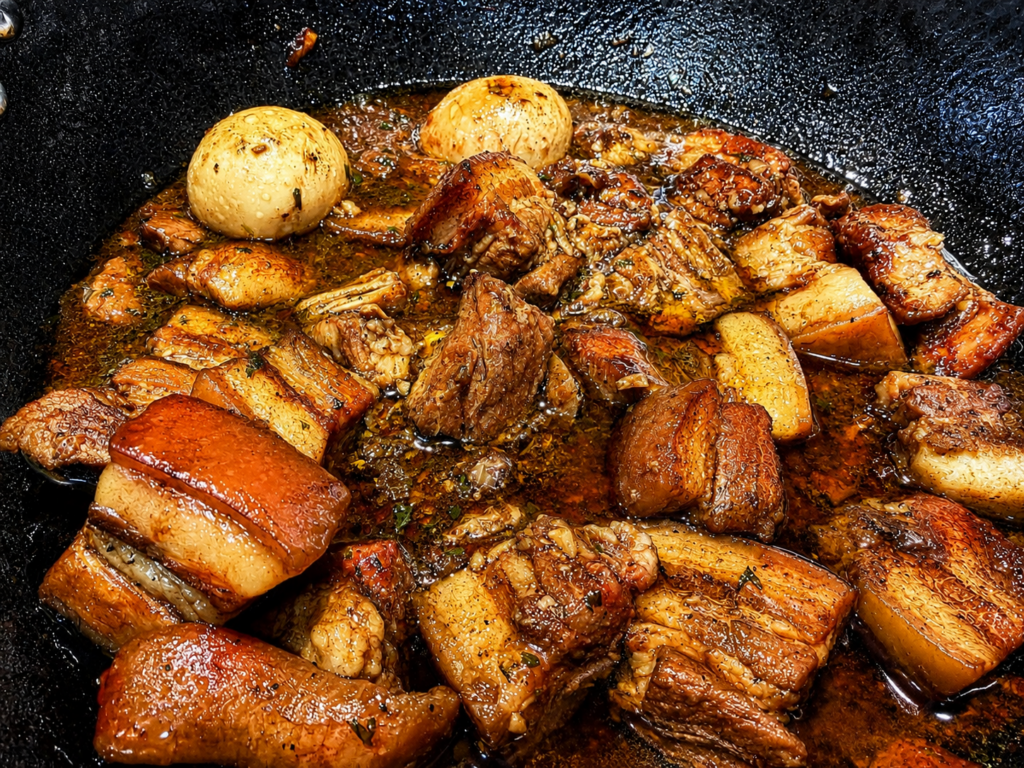
Pork Humba is more than just a beloved Filipino dish—it is a symbol of Bisaya hospitality, family traditions, and festive celebrations. Its roots trace back to Cebu, where generations of home cooks perfected the art of slowly braising pork until it becomes tender enough to melt in your mouth. The dish reflects the rich cultural history of the Visayas, influenced by centuries of trade with Chinese merchants, who introduced fermented black beans (tausi), an ingredient that remains a hallmark of authentic Humba.
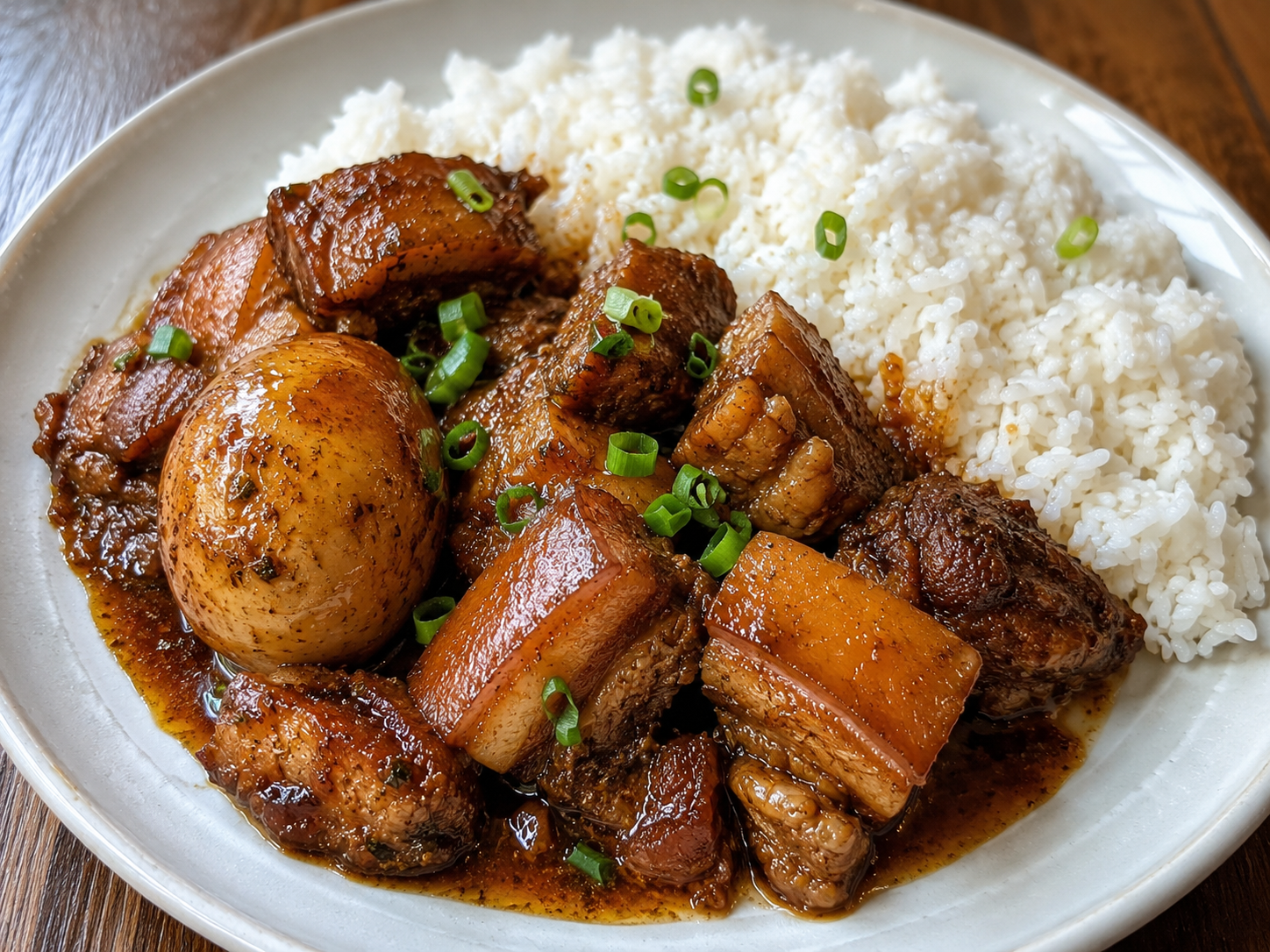
Unlike the classic Filipino adobo, Humba has a signature sweetness from brown sugar and pineapple juice, creating a rich, glossy sauce that perfectly complements steamed rice. Many families prepare Humba during fiestas, Christmas, birthdays, weddings, and special gatherings because it is easy to cook in large batches and tastes even better the next day as the flavors continue to develop.
Every Cebuano household has its own treasured version, passed down from parents to children. Some recipes are sweeter, others more savory, but all share the same comforting essence: a slow-cooked meal made with patience, love, and the joy of bringing family together around the table. For many Filipinos, the aroma of Humba simmering on the stove evokes memories of home, laughter, and celebrations shared with loved ones.
Today, Pork Humba remains one of the most iconic dishes of the Visayas, proudly representing Cebuano culinary heritage while continuing to win the hearts of food lovers across the Philippines and around the world.
✅ Quick Tips: Read the recipe in its entirety before you start cooking. This will help you understand the ingredients, steps, and timing involved, and allow you to prepare any necessary equipment or ingredients beforehand.
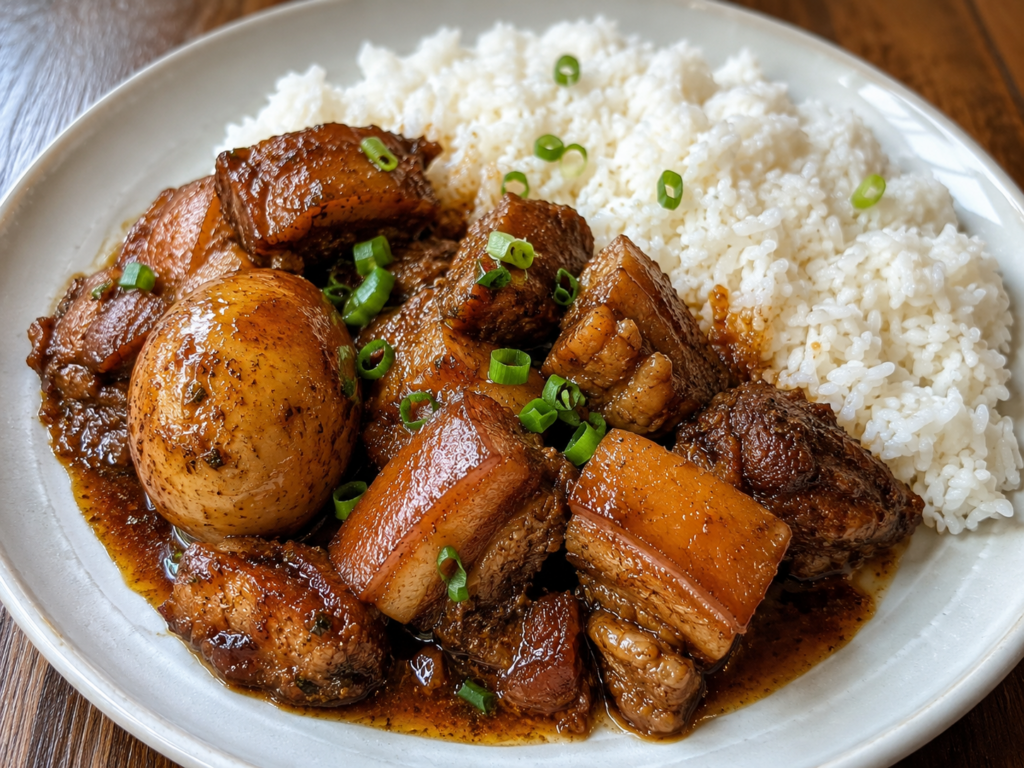

Filipino Pork Humba (Bisaya-Style) Recipe
Description
A rich, sweet, savory, and melt-in-your-mouth Cebuano classic that's perfect for family gatherings and Sunday lunches.
Ingredients
Heat oil in a wok or heavy pot. Sauté garlic until fragrant.
-
Add onions and cook until translucent.
-
Add pork belly and sear until lightly browned on all sides.
-
Pour in soy sauce and let simmer for 5 minutes.
-
Add pineapple juice, water, bay leaves, peppercorns, tausi, and banana blossoms.
-
Cover and simmer over low heat for 60–75 minutes until the pork becomes fork-tender.
-
Pour in vinegar. Do not stir for the first 3 minutes.
-
Add brown sugar and oyster sauce. Simmer uncovered until the sauce becomes thick and glossy.
-
Taste and adjust seasoning.
-
Serve hot with steamed jasmine rice.
Note
Notes
Notes
- Pork belly provides the richest flavor, but pork shoulder can be substituted for a leaner version.
- Traditional Bisaya Humba includes tausi (fermented black beans), which gives the dish its distinctive savory depth.
- Banana blossoms (dried lily flowers) are optional but add authentic flavor.
- The sauce tastes even better the next day after the flavors have fully developed.
